How to be more disciplined when studying:
- Core technique: Lower the barrier to starting, not finishing. Just get your books out, sit down, begin.
- Visual tracking: Print a calendar, mark an X for every study day. Seeing consecutive X’s creates momentum.
- Research shows: Starting is 80% of the battle. Once you begin, continuation becomes automatic.
Why it works:
Discipline isn’t willpower—it’s removing friction. Making studying easier to start than to avoid creates sustainable habits. Applied to any exam prep: candidates who study 1 hour daily for 300 days outperform those cramming 3 hours sporadically.
Most exam candidates fail not because they lack intelligence, but because they lack consistency. They study intensely for two weeks, burn out, then avoid their books for three weeks. This cycle repeats until exam day arrives and they’re underprepared.
I discovered a simple technique that transformed my study discipline—not through willpower, but by removing the psychological barriers that make starting feel impossible. It requires only a calendar and a pen.
Here’s how I went from chronic procrastinator to studying consistently for 300+ days straight.
How I went from full-time couch potato to crazy everyday runner, overnight.

At the start of my running efforts, I had to contend with a powerful demotivator – I hated running. I am not one of those types that naturally love to run or exercise – I am probably the laziest slob on the face of the earth.
I detested running fervently, made worse with the less-than-stellar London weather. However it was the easiest and most convenient way to exercise, so I decided to stick with it and instead, see how I could motivate myself better.
My observations after a week or so of running were interesting:
the majority of the barrier to overcome my demotivation to running is to simply make time, put on my running gear and get out of the door.
Once I forced myself out, I found that motivating myself to run became much easier. After all, I was already out, the time was already spent, so I might as well run and get some exercise out of it.
So from then on, I’d motivate myself this way – every day, I’d tell myself to just get on my running gear and get out. If I really didn’t feel like running after doing that, I would allow myself to just turn right back home, and take the day off. No hard feelings.
The result? For 3 months, I never took a single day off.
I eventually switched to a combination of gymming, running, and others, but for that 3 month period, this simple motivational tool worked wonders.
How to be more disciplined in your studies? Try this simple tool.

What is the ‘barrier’ that is most difficult to overcome in your exam studies?
For me it’s actually getting started – getting my books out, clearing a space, actually dragging my lazy ass to the table.
If you can just tell yourself to get started, and focus less on how much you have to get done, your success rate will grow by leaps and bounds.
I guarantee it.
Here is an additional tip to reinforce this: get an old-school calendar and print it out.
Keep it somewhere in your house where you will see it every day, such as your refrigerator, or next to your bed. Below is a cheery example:
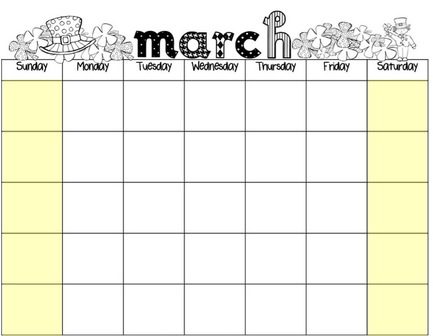
Just get started.
For every day you do manage to ‘set yourself up’ and put some quality time into studying (even if it’s a little bit), mark your calendar with a big fat X.
Eventually, your calendar may look something like this:
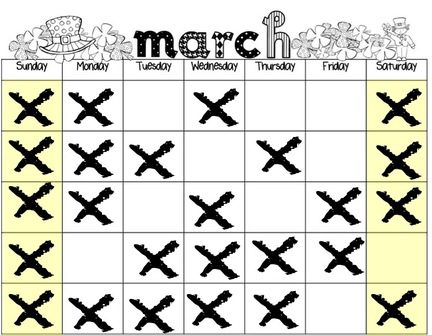
This simple habit will help you enforce the habit and routine of studying almost every day.
Not only will this encourage you to hit the books more often (since the calendar tells no lies), it also allows you to be more honest with yourself about how often you’ve studied.
Small, simple tweaks like these are the key to changing your routine to becoming a more effective exam candidate.
Why “just start” works: The psychology of discipline
Research in behavioral psychology shows that task initiation is the hardest part of any activity. Once started, what psychologists call “task inertia” takes over—continuing becomes easier than stopping.
A 2009 study published in the European Journal of Social Psychology found that habit formation averages 66 days, but the critical factor wasn’t duration—it was consistency of the starting cue. People who focused on “just showing up” (low barrier) formed habits 3x faster than those focused on “completing 2 hours” (high barrier).
For CFA candidates, this means:
High-barrier goal (fails frequently): “I will study Ethics for 3 hours tonight.”
- Procrastination triggers when 3 hours feels overwhelming
- Skip studying entirely when you only have 2 hours available
- Guilt accumulates, further reducing motivation
Low-barrier goal (succeeds consistently): “I will open my Ethics notes and read one Learning Module.”
- Easy to start even when tired
- Often continues naturally once started (task inertia)
- Builds confidence through consistent small wins
The calendar X-marking technique leverages this psychology. You’re not marking “studied 3 hours”—you’re marking “I started.” This reframes discipline as achievable rather than aspirational.
5 additional discipline strategies that compound with calendar tracking
1. The 2-minute rule (study edition)
Commit to studying for just 2 minutes. Tell yourself you can stop after 120 seconds.
Why it works: Starting for 2 minutes activates the same neural pathways as studying for 2 hours. Once you’re in “study mode,” stopping at 2 minutes feels harder than continuing. 80% of the time, you’ll keep going naturally.
CFA application: Set a timer for 2 minutes and read one LM. When the timer ends, you’ll likely finish the reading. Then you’ll likely do one practice question. Then another.
2. Pre-commitment through public accountability
Share your study goals with someone who will follow up—not judge, but simply ask “Did you study today?”
A 2015 study in the American Journal of Lifestyle Medicine found that people with accountability partners achieved goals at 2x the rate of solo goal-setters. The key is regular check-ins, not harsh judgment.
CFA application: Send a study buddy your calendar photo weekly. Seeing your streaks encourages them; their streaks encourage you. Or post progress updates on LinkedIn monthly—the public commitment increases follow-through.
3. Environment design: Make starting automatic
Your environment determines behavior more than willpower. Design your space so studying requires zero decisions.
Implementation:
- Leave CFA notes open on your desk overnight (visual cue)
- Put phone in another room before studying (remove distraction)
- Study same time/place daily (routine reduces decision fatigue)
- Create “study uniform” (specific hoodie/location signals brain: it’s study time)
Why it works: Willpower depletes throughout the day. By removing decisions (“Should I study now? Where? Which topic?”), you preserve mental energy for actual studying.
Research from Duke University shows 45% of daily behaviors are habitual, triggered by environmental cues rather than conscious decisions. Design your environment to trigger studying automatically.
4. The Pomodoro technique (adapted for CFA)
Study in focused 25-minute blocks with 5-minute breaks. After four blocks, take 15-30 minutes off.
Why CFA candidates benefit:
- Matches typical attention span (20-30 minutes before mental fatigue)
- Makes long study sessions feel manageable (4 Pomodoros = 2 hours)
- Forced breaks prevent burnout
- Creates clear “study unit” you can mark on your calendar
Implementation: Use a physical timer (not phone apps—checking phone breaks focus). Set 25 minutes, study one LM or 10 practice questions, take 5-minute break (walk, stretch, water). Repeat.
Mark your calendar X only after completing at least 4 Pomodoros (100 minutes of actual study time). This ensures X’s represent substantial effort, not 10 minutes of procrastination.
5. Habit stacking: Link CFA study to existing routines
Attach new habits to existing strong habits. Your brain already has automated routines—leverage them.
Formula: “After [EXISTING HABIT], I will [NEW HABIT].”
CFA examples:
- “After my morning coffee, I will review 5 flashcards.”
- “After lunch, I will do 10 practice questions.”
- “After dinner, I will read one LOS.”
This works because existing habits trigger the new behavior automatically. You don’t rely on remembering to study—your daily routine prompts it.
A 2019 study in Health Psychology Review found habit stacking increased behavior consistency by 40% compared to standalone goal-setting.
When the calendar method fails: Common problems and fixes
Problem 1: Broke your streak, lost motivation
Why it happens: You miss one day, feel like you “failed,” and abandon the entire system.
The way to fix this is implement the “never miss twice” rule. Missing one day is life. Missing two days consecutively is a pattern that destroys habits. If you miss Monday, Tuesday is non-negotiable.
Also, start a “comeback streak” below your broken streak. Don’t erase the old X’s—they’re proof you can do it. Just start marking new X’s below.
Problem 2: Marking X’s without actually studying
Why it happens: You gamed the system—opened books for 5 minutes, marked X, closed books.
Fix: Define minimum viable study session: “X = minimum 2 Pomodoros (50 minutes) of focused study OR completion of one topic reading with end-of-chapter questions.”
Write this definition at the top of your calendar. No X unless you meet the standard.
Problem 3: Calendar creates guilt instead of motivation
Why it happens: You see blank days and feel terrible rather than motivated.
Fix: Reframe blank days as “recovery days.” Mark them with an “R” instead of leaving blank. Even elite athletes take rest days—your brain needs them too.
Aim for 5-6 X’s per week, not 7. This makes streaks sustainable long-term rather than leading to burnout.
Problem 4: Study time but not retaining anything
Why it happens: You’re physically present but mentally checked out (passive reading without comprehension).
Fix: Mark different symbols based on study quality:
- X = Focused study with full comprehension
- / = Studied but distracted, need to review again
- O = Reviewed previous material
This creates accountability for study quality, not just quantity. If you’re marking mostly “/” symbols, you’re not disciplined—you’re procrastinating while appearing productive.
Study discipline & habit formation FAQs
Keep going—don’t let perfectionism sabotage progress. Missing one day doesn’t erase weeks of effort. Simply leave that day blank (or mark it with a dash) and continue your chain the next day.
Research on habit formation shows missing one day has minimal impact on long-term success if you immediately resume. However, missing two consecutive days significantly increases the likelihood of complete habit abandonment.
If you miss multiple days in a row, analyze why: Were your goals too ambitious? (Lower the barrier.) External circumstances? (Schedule around them.) Motivation fading? (Revisit your why.) Then adjust your approach and restart without guilt.
The calendar’s purpose is honest self-tracking, not self-punishment. Progress beats perfection every time.
Absolutely. The “lower the barrier + track completion” principle works for any behavior requiring daily consistency: exercise, writing, language learning, meditation, creative projects, or professional skill development.
The key is identifying your specific barrier. For exercise, it might be changing into workout clothes. For writing, opening your document. For learning a language, launching the app. Once you’ve overcome that barrier, continuing becomes psychologically easier.
The calendar provides two psychological benefits:
(1) Visual progress creates momentum (seeing consecutive X’s motivates you not to break the chain), and
(2) Honest accountability (blank days are visible evidence, preventing self-deception about your effort level).
This technique originated with comedian Jerry Seinfeld, who used it to write jokes daily. If it works for professional comedians and CFA candidates, it probably works for your goal too.
Adapt the technique to your reality rather than abandoning it. If daily consistency is impossible due to shift work, travel, or family obligations, switch to a “sessions per week” target instead of “every day.”
For example, mark your calendar with a weekly goal of 5 study sessions. By week’s end, you need 5 X’s anywhere in that week. This maintains the visual tracking and psychological benefits while accommodating schedule variability.
An alternative approach is to use color coding. Green X for ideal days (2+ hours), yellow X for short sessions (30-60 minutes), blank for zero study. This shows patterns without demanding perfection.
The core principle remains: lower the barrier, track honestly, build momentum. Adapt the specifics to your life circumstances rather than letting irregular schedules become an excuse for no tracking at all.
The calendar technique addresses exactly this problem. When results feel distant (your exam is 4 months away), the X’s provide immediate micro-rewards. Each X is proof you did the work, even if you don’t “feel” smarter yet.
Learning feels invisible day-to-day but becomes obvious over weeks. You won’t notice yourself getting better at derivatives or financial statement analysis on day 5 versus day 4. But compare day 30 to day 1, and the progress is unmistakable.
The calendar makes invisible progress visible. Those 20 consecutive X’s represent 60+ hours of cumulative study time—that’s 20% of your 300-hour CFA target. Seeing the chain reinforces that daily effort compounds even when each individual session feels insignificant.
Trust the process. Track honestly. Results follow effort with a lag time.
You can, but physical calendars have unique psychological advantages that apps don’t replicate well.
Physical calendar benefits: Constant visibility (on your fridge/bedroom wall, you see it 5-10 times daily), tactile satisfaction (physically marking an X feels rewarding), no distractions (looking at your phone to mark an X risks getting pulled into social media), permanence (can’t delete or “edit” your history).
Digital apps work best if you’re already disciplined with phone use, you want detailed metrics (hours logged, topics covered), or you need remote access while traveling.
A hybrid approach could be to use a physical calendar for daily X’s (psychological momentum), plus a digital tool like our Free CFA Study Planner for detailed progress tracking and score predictions.
The best system is the one you’ll actually use consistently.
Research on habit formation (popularized by Phillippa Lally’s 2009 study) found habits take an average of 66 days to become automatic, with a range of 18-254 days depending on the behavior’s complexity and individual differences.
For studying specifically: Expect 6-8 weeks of conscious effort before it starts feeling automatic. Early weeks require willpower to overcome inertia. Weeks 4-6, you’ll notice sitting down to study requires less mental negotiation. By weeks 7-8, skipping a study session feels weirder than doing it.
This is why the calendar technique matters most in the first 2 months. Those first 30-40 X’s build momentum that carries you through the harder middle months. Once the habit is established, studying becomes your default evening routine rather than a willpower battle.
Stick with it through the initial hard phase. It gets easier.
Then change your environment—it’s easier than fighting it daily. Your environment should make starting effortless, not an obstacle course.
Remove friction: Dedicate a specific study space with materials ready (not the kitchen table you have to clear every time). Keep your calculator, notes, and laptop charger permanently at your study spot. Pre-load tomorrow’s topic in bookmarks/notes so you don’t waste 10 minutes figuring out where to start.
Make it visible: Leave your study materials in view as a visual cue. Closed books in a drawer = out of sight, out of mind.
If you lack a dedicated space: Use “place stacking.” Library = study mode. Kitchen table = family time. This mental association helps your brain switch into focus mode automatically.
Your environment should pull you toward studying, not push you away from it.
Do you have any similar habits or tips to share on how to be more disciplined, especially when studying? Let us know in the comments below!
Meanwhile, you may find these related articles of interest:
What I do is I use an Android app and log each and every minute of my study time. I also share the same with one of my ” Accountability friend”. It motivates me a lot and helps a lot to keep disciplined and get better and better every day. Consistency is the achievement of this small hack.
Hi Shreyansh, that’s a good tip, thanks for sharing!
My weakness is probably looking at the phone itself is distracting, so an old school paper and pen works better for me 😛
The best thing I’ve done is make an spreadsheet on excel, whereby I log the hours I do on each date for each Reading in the syllabus. It is strangely addictive, if not satisfying to see the hours you’ve committed to study mounting up, towards the golden 300. Would definitely recommend doing this.
We’re working on a version to make available to all our readers – hopefully we can release that soon!
Discipline and moderation are key in any area of your life. So glad you were able to share this experience with us, and translate it to school/exams/life in general!
Glad that it helps!
Without thinking it would work like you mentioned in the article, I started doing something similar but a little more in depth, and more rewarding. I had no idea how much time I needed to study each week and each subject, so I put up a table with all the subjects and the aprox time needed to study each of them. This came up: https://docs.google.com/spreadsheet/ccc?key=0AvyoktpsuDcCdDNXX3JHUWpOd2txdlg3c2h4QnM3cWc&pli=1#gid=0 It’s very addicting to fill out the “Hours studied” and “Pages read” column. I love beating the time I thought it would take me to learn the subject, check the minutes per page, and try to beat the deadline so I can take some time off for games/gf without feeling bad. Some friends and study mates have found it helpful too, if you got any suggestions, they are very welcomed.
Hey Dan That’s a really awesome tool! This has got us thinking – perhaps we can expand this into a study log tool that our readers can use. Would you mind if we expanded on the principles outlined by you here?
Hey, please go ahead! I’m glad I can give something back after all the advice I have taken from you. Looking forward to use it too!
Hey, please go ahead! I’m glad I can give something back after all the advice I have taken from you. Looking forward to use it too!
Great tip on the calendar markings! Will try that out for this June exam.
Simple yet very powerful. it indeed reinforces you to be on track!